Principles in Motion Design
Before jumping into the technical side of motion design, Animated Storytelling, by Liz Baker, focuses on something much more important: intention. The book breaks down how story, planning, and clarity shape successful animation, regardless of skill level or software.
Traditional storytelling often follows a three-act structure with a clear beginning, middle, and end, and even short motion pieces benefit from that sense of progression. At the same time, motion design doesn’t always need to be linear to be effective. Nonlinear storytelling allows ideas to be introduced through rhythm, pacing, and visual cues rather than a strict sequence of events. Thinking about structure in this way helped reinforce that motion should guide the viewer’s understanding, whether the story unfolds clearly from start to finish or through more abstract, layered moments.
Unlocking Your Story isn’t about choosing the “right” structure so much as choosing the one that best fits the idea. Exploring both narrative and experimental approaches made it clear that motion design gives storytellers a lot of freedom. Stories can reveal information immediately, begin in the middle, focus on a single core idea, or rely almost entirely on visual rhythm and repetition. Experimental approaches like visual music, poetic abstraction, and evolving patterns show how meaning can emerge through pacing, continuity, and contrast rather than traditional plot. This way of thinking reframes storytelling as a process of discovery, where experimenting, simplifying, and even stripping elements away can lead to stronger and more intentional outcomes.
Storyboarding reinforces that strong motion design depends on thoughtful planning, not just animation skills. Considering shot variety, framing, and staging helps establish visual hierarchy and guide attention, while continuity ensures that movement and transitions feel clear and believable. Timing plays a major role in shaping rhythm and pacing, especially when paired with music and sound effects, which can dramatically influence how motion is perceived. This reminds me that how long a moment lasts can be just as important as what’s happening on screen.
Inspired By Motion
Do I Wanna Know? Music video by the Arctic Monkeys has always stuck with me visually. The use of simple line work paired with the rhythm of the music shows how motion doesn’t need to be complex to be effective. The visuals respond directly to the sound, rising, falling, and evolving with the track, which makes it a strong example of how music can drive inspiration and storytelling. It demonstrates how motion, sound, and minimal visuals can work together to create something memorable.
KEYFRAMES by Stefan Klauss uses imagery and motion in a really effective way to communicate energy and movement without feeling overwhelming. The visuals guide the viewer through the story naturally, almost acting like visual cues in place of heavy text. It’s a good example of how strong motion and pacing can carry meaning while keeping the content engaging and clear.
Three Cliché Advices by Atlantico blends text and imagery in a witty, motion-driven way that keeps both elements working together instead of competing for attention. The typography and visuals move rhythmically, using animation to enhance the meaning of the words rather than just decorate them. It’s a strong example of how motion graphics can make text feel alive and dynamic, not static and flat.
Raw Showreel uses bold imagery, typography, and motion to communicate meaning through pacing, rhythm, and visual sequencing rather than relying on heavy explanation. The animation feels intentional and experimental, showing how movement can reinforce both mood and message while keeping visuals and text working together seamlessly.
These pieces set a high bar, and they’re the level of animation I hope to work toward in the future.
Concept Development
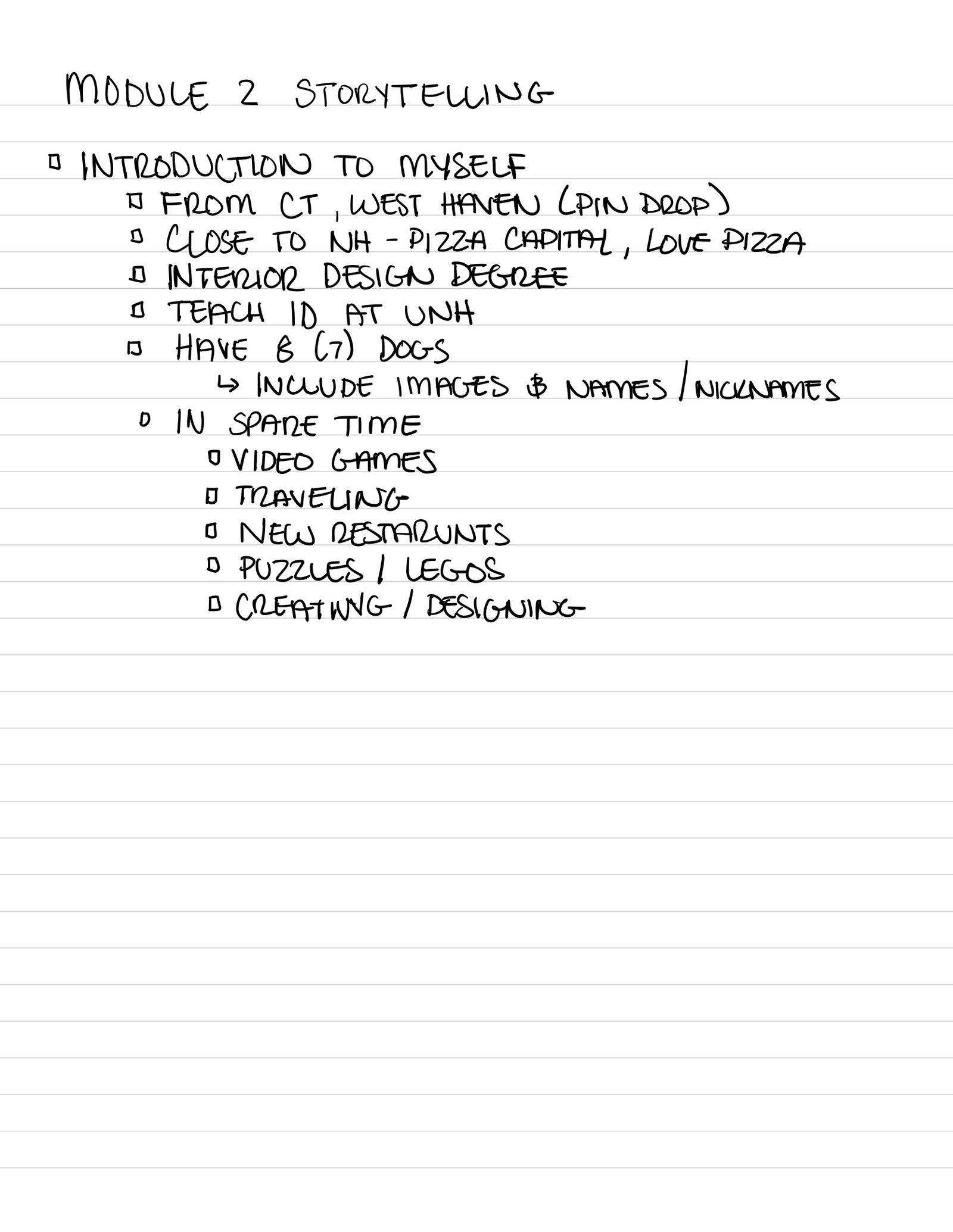
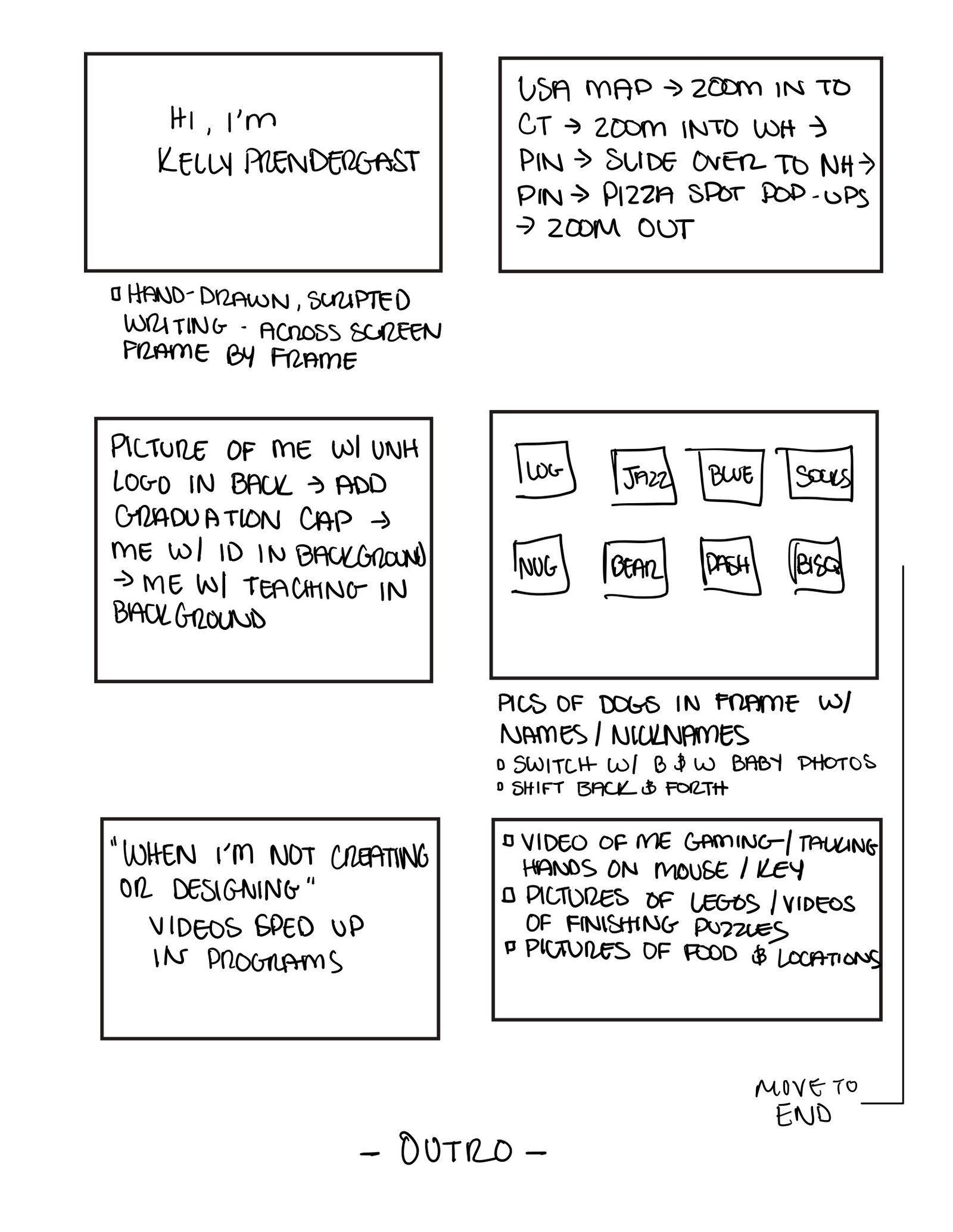
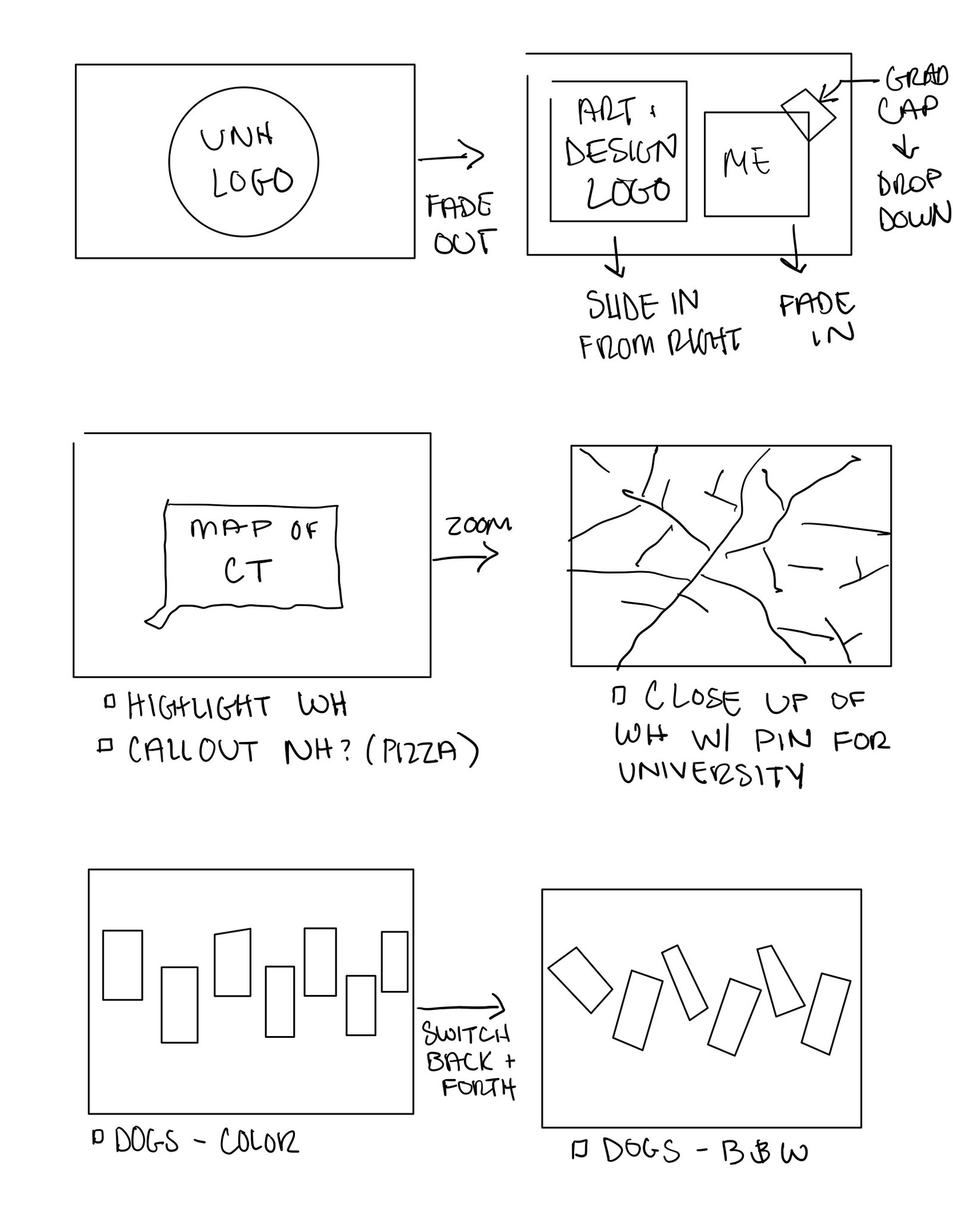
Before starting production, I sketched out ideas to clarify the look, feel, and content of my introduction video. The final product varies slightly from these early concepts as I navigated the limitations of my knowledge of the software and discovered what worked and what didn’t along the way. Below is part of my creative process:
Who Am I?
Creating this introduction video was my first experience working in Adobe After Effects, and it definitely challenged me more than I expected. The goal was to introduce myself visually while experimenting with motion, animation, and editing techniques. I’ll be honest… it was not my favorite software at first. I’ve worked with many different design and editing programs in the past, so jumping into a program I had absolutely no experience with was a bit overwhelming. There was definitely a learning curve, and it took trial and error just to understand the basics of how the program works.
That said, the more time I spent in After Effects and the more tutorials I watched, the more everything started to click. As I learned new tools and shortcuts, I went back and reworked parts of my video to improve the timing, transitions, and overall flow. While it was frustrating at times, that process helped me better understand how motion design works and why After Effects is such a popular program among designers. Even though it’s not my favorite software right now, I can see its potential and why people enjoy working in it.
I ran into some technical issues during the rendering export, specifically with my voiceover and sound effects not syncing correctly with the visuals. Troubleshooting this took about an hour, and while I was able to improve it, it’s still not as perfect as I would have liked. This experience showed me how important audio timing is in motion projects and how small technical issues can have a big impact on the final result.
The images and content I chose support my background and help visually introduce who I am. All of the images and video clips related to me, my hobbies and pets were my own, which made the project feel more personal and authentic. Each visual directly connected to what I was talking about, rather than feeling random or decorative.
I focused on keeping transitions clean while still adding variety and movement throughout the video. I made an effort to avoid static screens by incorporating motion wherever possible, which helped keep the video visually engaging. Overall, while the process was challenging, it pushed me outside of my comfort zone and gave me a better understanding of motion design and After Effects as a tool.
Check out my introduction video below:
References
Blazer, L. (2019). Animated Storytelling (2nd ed.). Peachpit Press.
No responses yet