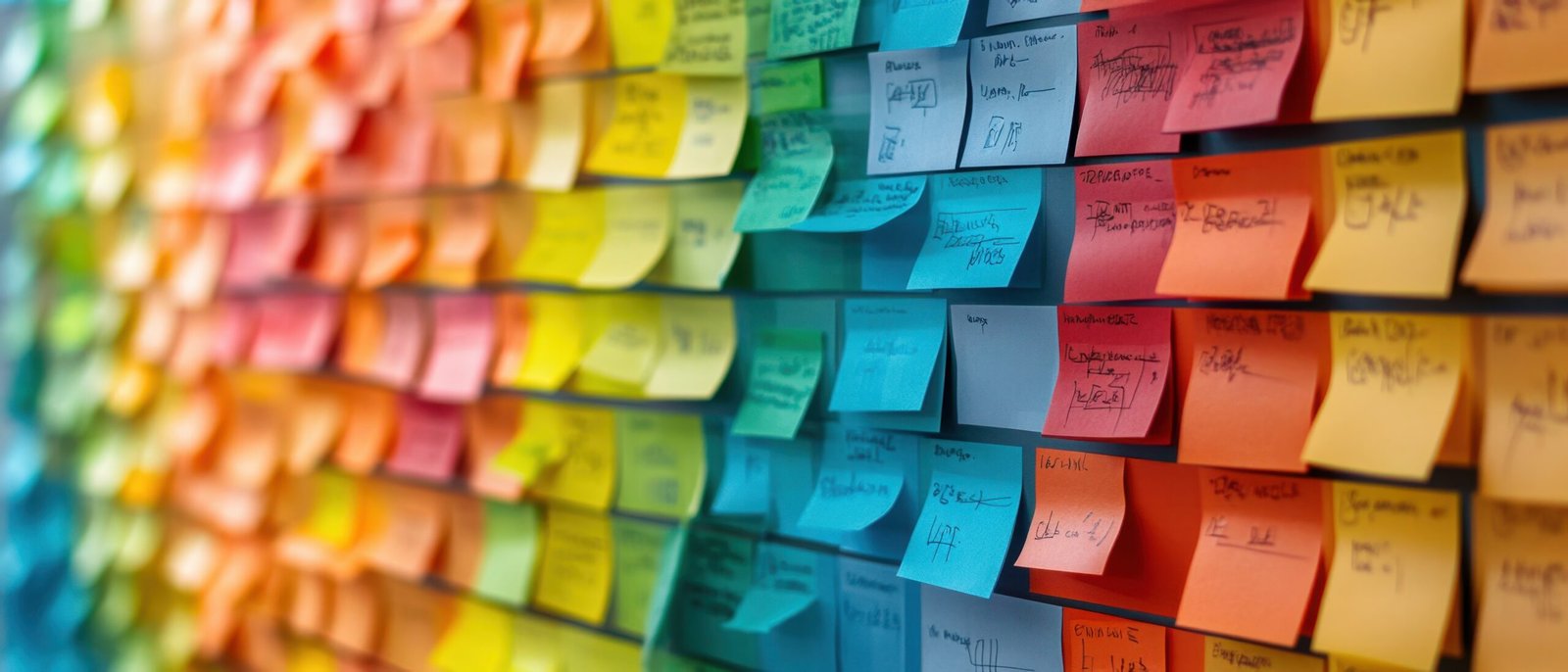
When I think of project management, I don’t just see a Gantt chart or a bunch of color-coded sticky notes. To me, it’s about creating structure in the chaos… a way to turn big, overwhelming goals into bite-sized steps that can actually get done. Project management is like the translation layer between vision and execution. Without it, most ideas stay stuck in “what if” territory.
At its core, Project Management is the discipline of planning, organizing, and guiding work to completion. But it’s also a mindset. It requires balancing structure with flexibility and accountability with collaboration. There’s a reason skilled project managers are so valuable: they make sure things don’t just start, they finish.
The importance of project management becomes clearer when we look at today’s attention economy. Our phones, apps, and notifications constantly pull us out of the “deep work” we need for meaningful progress. That’s where tools and methods like Agile Software Development, Design Thinking, and Kanban come in. Each offers a framework for focus; whether that’s breaking projects into small iterations, reframing problems through empathy, or visualizing tasks on a board to track flow.
For my white paper project, I set up a Trello board to keep everything organized. I broke the project down into stages: research, ideation, drafting, visual design, and revisions + final submission. Within each stage, I created checklists and deadlines. Having it all laid out visually gave me two things: (1) a clear roadmap so I wasn’t just staring into the void of “do project,” and (2) accountability, because those little digital cards serve as reminders that I either hit a deliverable… or I don’t.
Check out how I set it up:
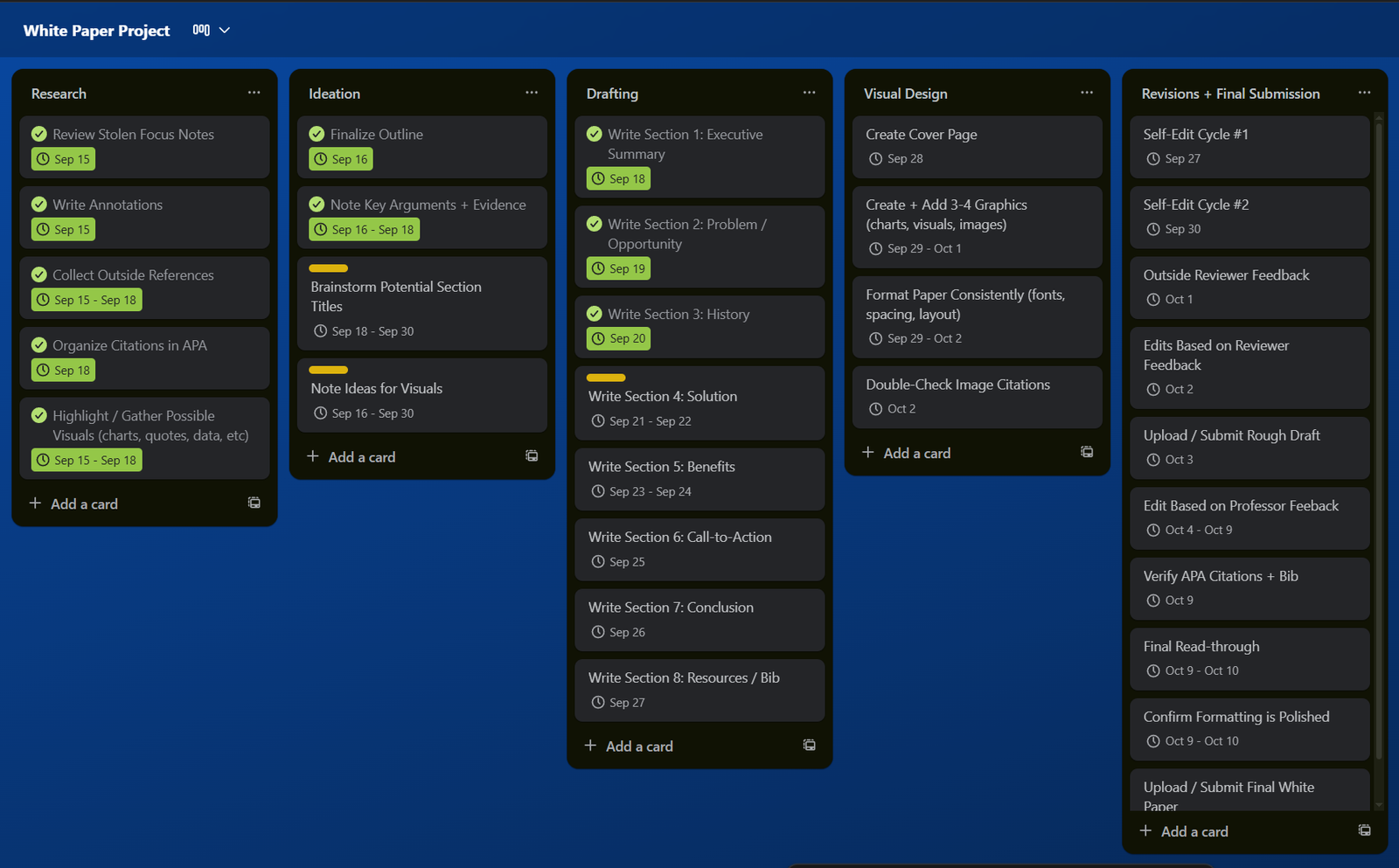
What I found is that Trello gave me the same kind of productivity boost that Kanban boards were originally designed for, a simple but powerful way to make the invisible visible. And once things are visible, they’re actionable.
Ultimately, project management isn’t about fancy tools or jargon. It’s about focus. Whether it’s through agile sprints, sticky notes on a wall, or a Trello board on your laptop, the point is to create a system that frees up your brain to do the actual deep work. And if graduate school has taught me anything, it’s that focus is the one resource we can’t afford to waste.
References
“Project Management.” Wikipedia, Wikimedia Foundation, 13 Aug. 2025, en.wikipedia.org/wiki/Project_management.
“Agile Software Development.” Wikipedia, Wikimedia Foundation, 13 Sept. 2025, en.wikipedia.org/wiki/Agile_software_development.
“Design Thinking.” Wikipedia, Wikimedia Foundation, 2 Sept. 2025, en.wikipedia.org/wiki/Design_thinking.
“Kanban.” Wikipedia, Wikimedia Foundation, 2 Sept. 2025, en.wikipedia.org/wiki/Kanban.
One response
Hi my family member I want to say that this post is awesome nice written and come with approximately all significant infos I would like to peer extra posts like this