Sound Ideas, by Liz Blazer makes it clear that sound isn’t a finishing touch; it’s the backbone of how an animated story moves, feels, and connects with its audience. Instead of treating it like an afterthought in production, the smarter move is to lead with it. If music and audio are doing 80% of the emotional heavy lifting, then waiting until halfway through the animation to figure it out is basically sabotaging yourself. The chapter clarified the difference between diegetic sound, anything that exists in the world of the film, and non-diegetic sound, which sits outside the action but deepens it. It also stressed restraint: make a list of sound effects you want, then cut it in half. Less really is more. Music, especially subtle atmospheric tracks, can quietly guide emotion, set rhythm, and give the audience breathing room without screaming for attention. And when it comes to dialogue, it should be simple, natural, purposeful; if you can show it visually, you should.
For my own project, this chapter shifted my approach in a practical way. I’m planning to revisit my storyboard and intentionally expand the moments where sound design will matter most, rather than layering it in later. I also want to choose background music before animating so it can act as a compass for pacing and tone. Since I’m not planning to use dialogue in my stop-motion piece, the pressure is on to let music and sound effects carry the narrative alongside the visuals, which honestly feels like the right challenge. Even without dialogue, the principles still apply: clarity, restraint, and intentional timing. If a sound cue lands even a few frames off, it can ruin the moment. So the goal is thoughtful, almost invisible sound design that strengthens the story without ever pulling focus from it.
Diegetic sounds vs Non-diegetic sounds in practice through The Sounds of Springfield:
Design Wonderland, by Liz Blazer, argues that world-building isn’t just background decoration; it’s the framework that holds your entire story together. Animation gives you permission to create absolute chaos if you want to, but the catch is that your chaos needs rules. The “yes, and…” mindset is crucial here: once you establish the logic of your world, you have to commit to it. Break your own rules, and the audience feels it immediately. Credibility disappears fast when continuity slips. Whether your setting is grounded in reality, blended with fantasy, or completely imagined, you still need to define the physical, social, and visual laws that govern it. Time and place aren’t arbitrary decisions either; they should intensify conflict and create obstacles for your characters. Even the smallest detail about an era or a location can elevate the stakes.
What really stood out to me is how animation is uniquely positioned to push boundaries in ways no other medium can. If you want to flip gravity on its head, reinvent social hierarchies, or exaggerate color and form beyond what exists in nature, animation lets you do that without apology. But that freedom works best when it’s intentional. Studying real-world physics, social systems, and design principles gives you something solid to subvert. Space, line, shape, color, contrast, texture… these aren’t just aesthetic choices; they’re storytelling tools that establish tone and identity. Especially in motion graphics and branded work, where you might not have characters to rely on, your visual laws become the personality of the piece. For me, the idea of pushing boundaries feels less like random experimentation and more like disciplined imagination. The possibilities are endless, yes, but the real power comes from building a world bold enough to stand out and structured enough to feel believable.
Duncan Hatch’s design wonderland: Cosmohedron (2023)
Audio Research & Sound Analysis
1. Wall-E (2008)
Wall-E is a great example of how powerful sound design can be in animation. The movie has very little dialogue, especially at the beginning, but you still clearly understand what the characters are feeling. The beeps, clicks, whirs, and little robotic sounds give Wall-E and EVE real personality. Every movement has a purpose, and the sounds help tell the story just as much as the visuals do. It shows that in animation, good audio isn’t just background noise, it’s a key part of the storytelling.
2. Piper (2018)
In Pixar’s short, Piper, sound does way more than just fill silence; it brings the world to life. Even though the story’s tiny and mostly without dialogue, the audio, from the soft rush of waves to the fast little chirps of the bird, makes everything feel real and grounded. The sounds help guide your emotions as Piper learns to face her fear, so you’re not just watching the story, you’re feeling it too.
Typography in Motion
1. SE7EN (1995)
This title sequence is iconic because the jittery, scratched, flickering typography immediately creates a sense of instability and obsession. The movement feels handmade and slightly “off,” mirroring the disturbed psychology of the killer before he ever appears on screen. Rather than serving as simple decoration, the animated text establishes the film’s tone and genre right away, leaving the audience unsettled from the start. It’s a powerful example of how typography in motion can psychologically prime viewers before the story even begins.
2. Stranger Things (2016-2025)
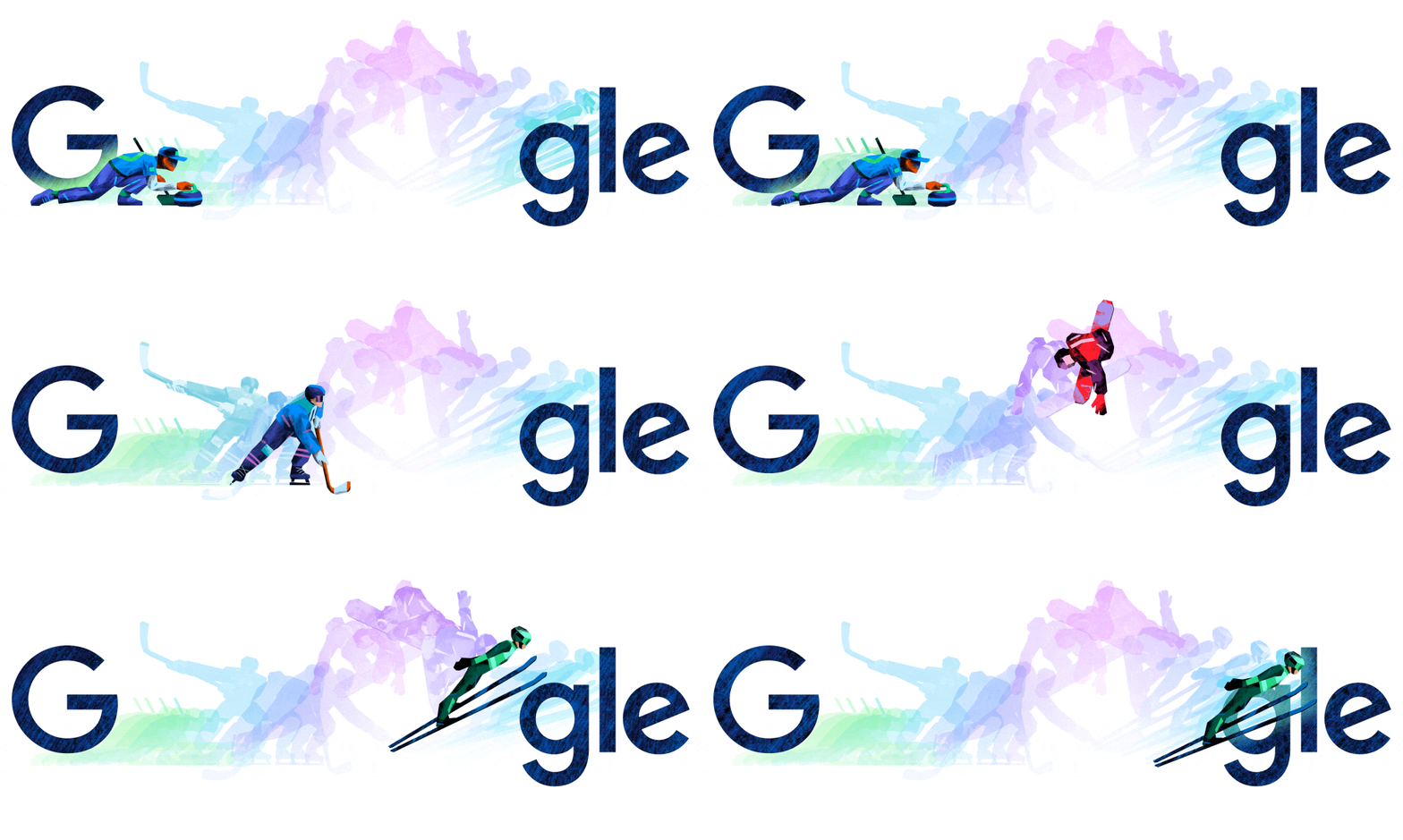
This title sequence relies on minimal movement, with glowing red letters slowly assembling and sliding into place. The deliberate pacing builds tension, while the typography’s reference to 1980s horror book covers immediately reinforces the time period and genre. Paired with the music, the restrained animation creates a strong sense of anticipation without feeling forced or overworked. It proves that text animation doesn’t need to be flashy to be effective… confidence, control, and simplicity often make a stronger impact than excessive motion.
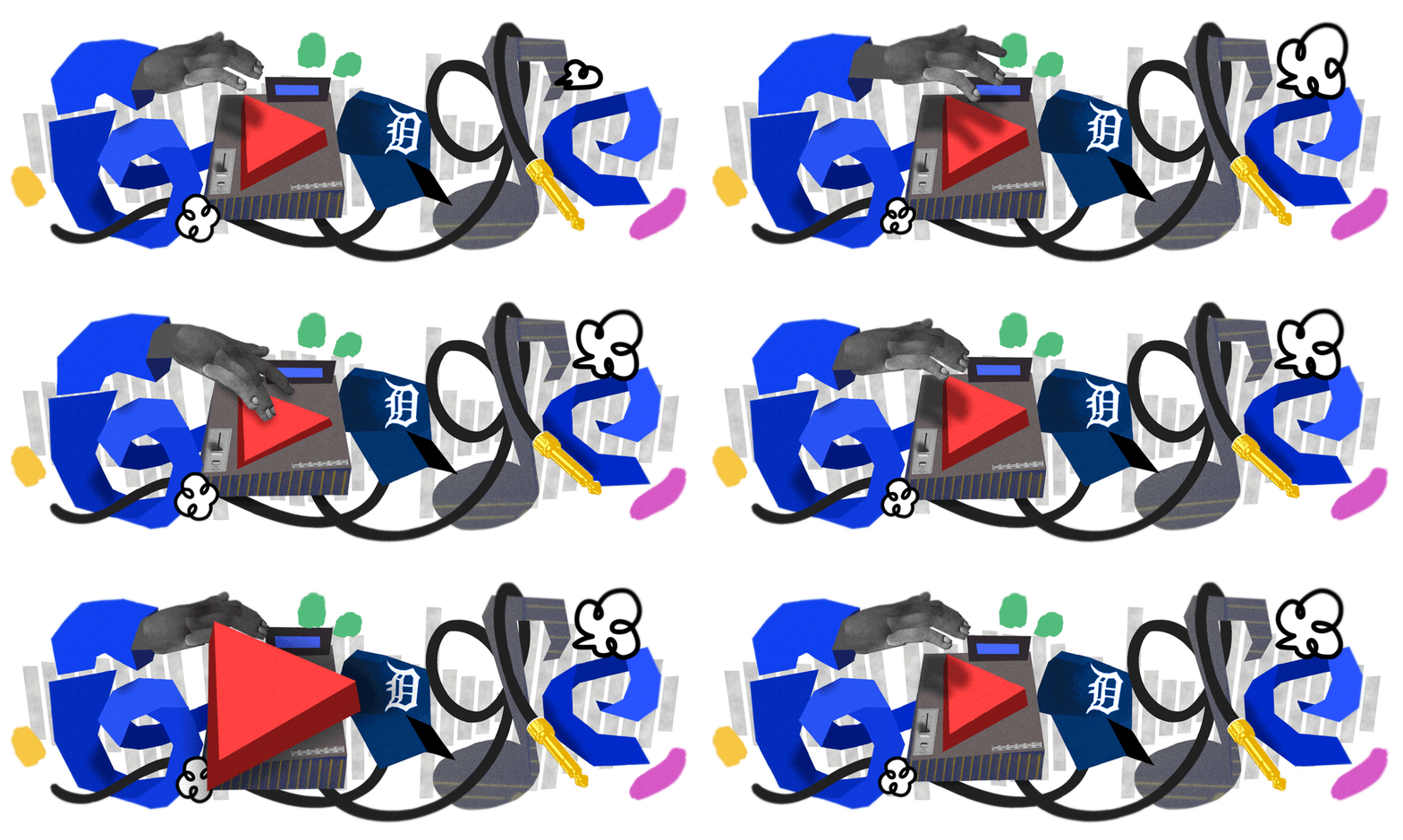
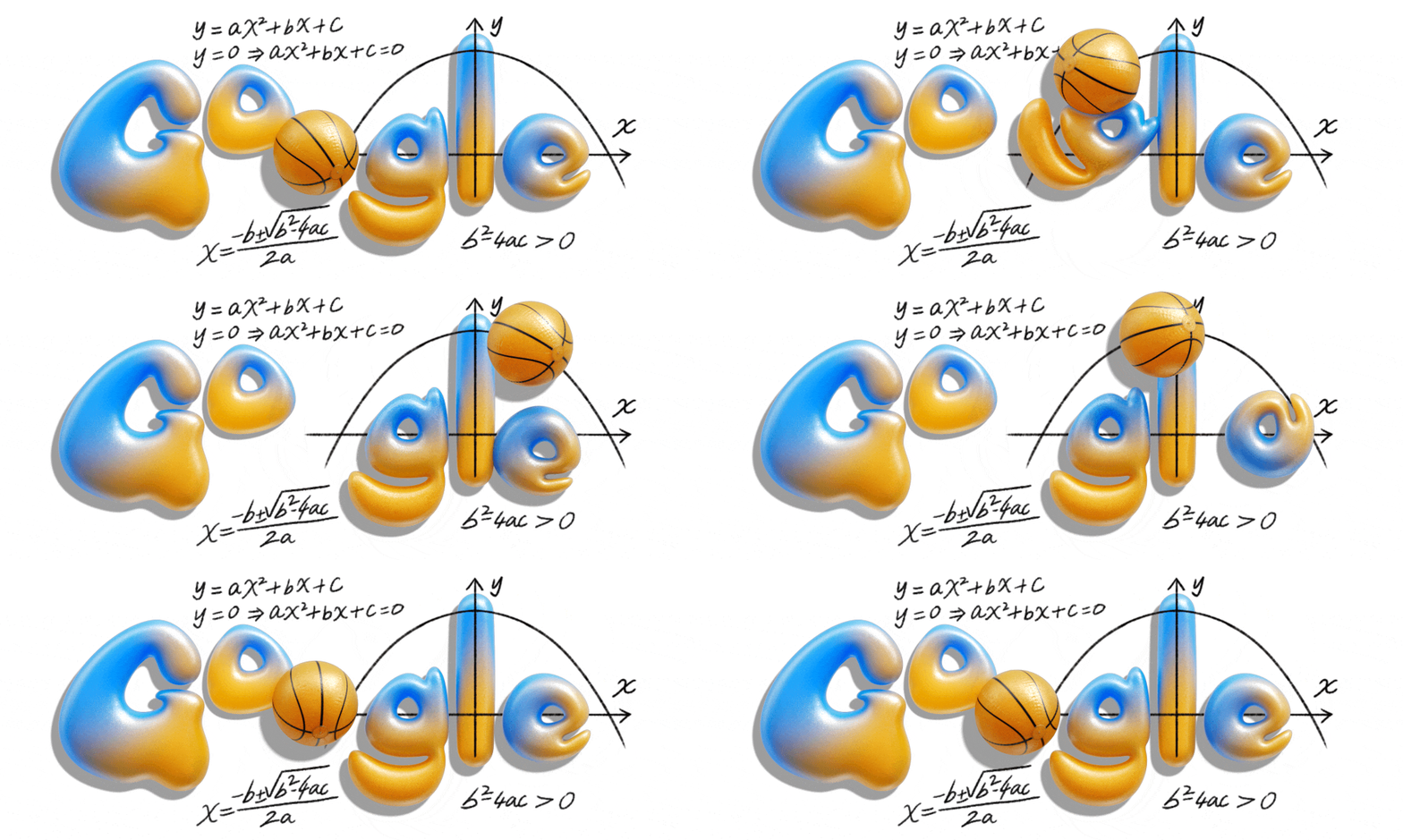
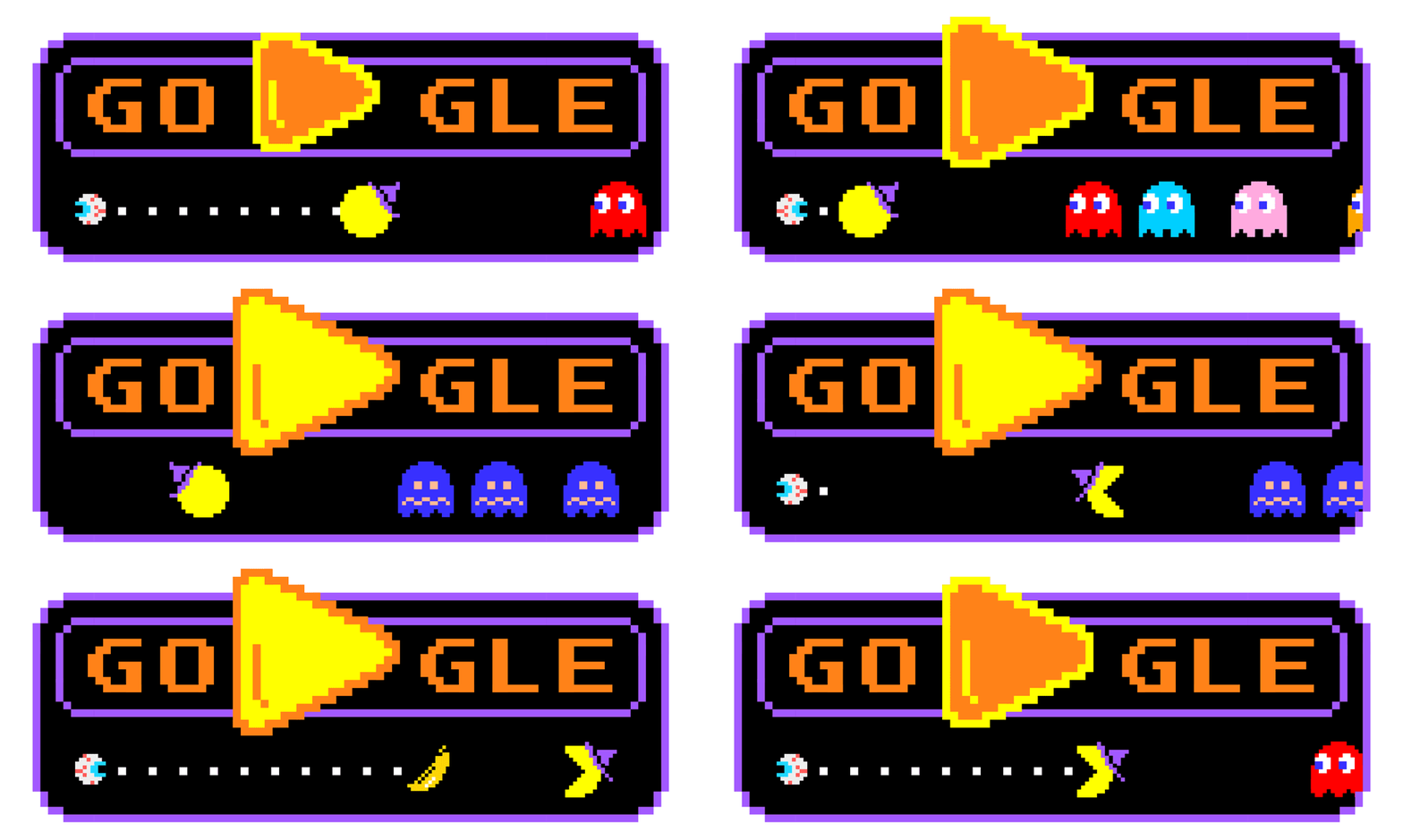
3. Google Doodles
Some fun animations of the Google logo by: Google Doodles
Better Together
“You don’t have to figure it out alone.”
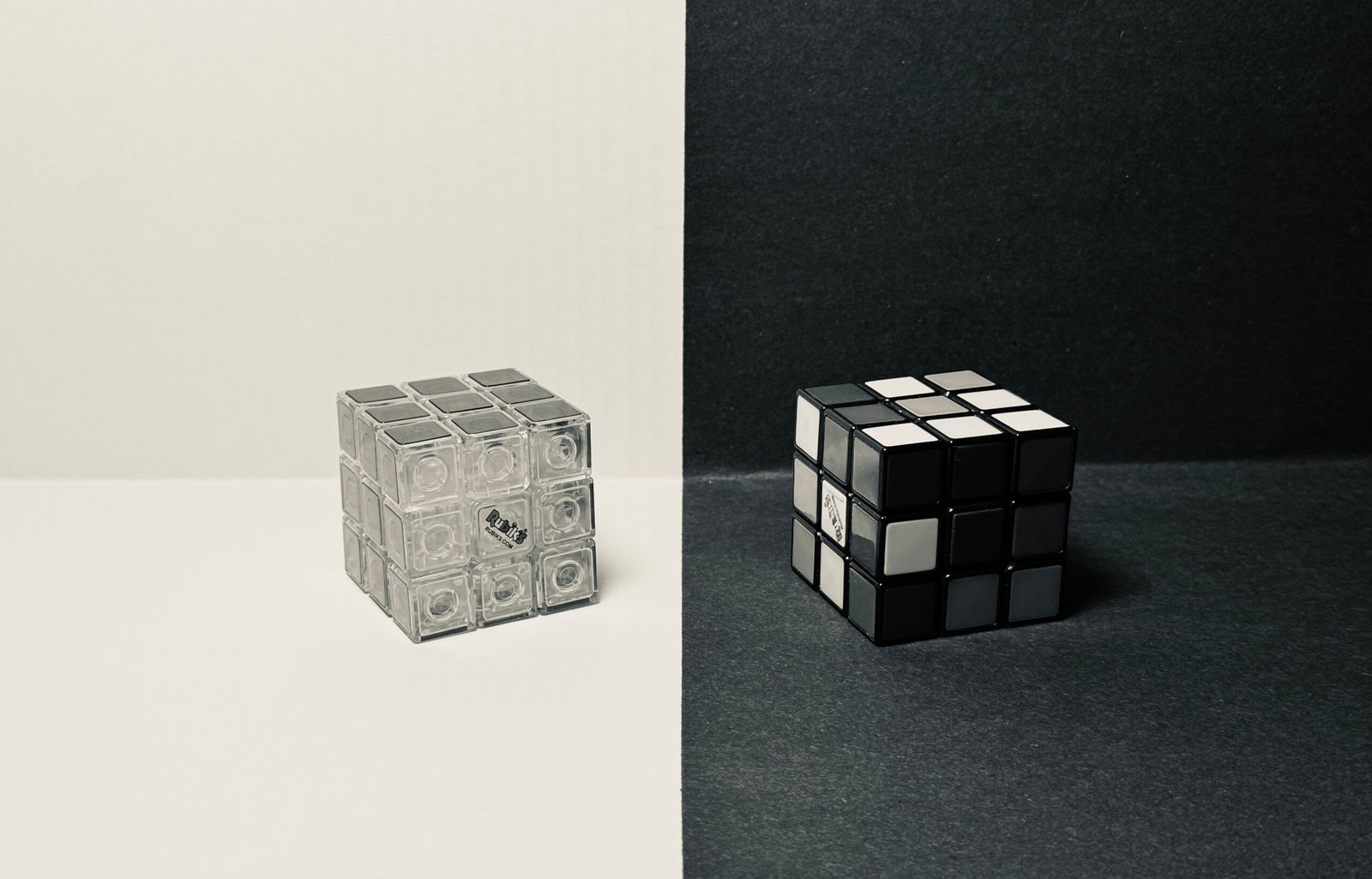
Through color, motion, and music, two Rubik’s Cubes tell a story about struggle, growth, and the quiet power of helping someone find their way.
Behind The Scenes
I began by outlining my linear story and translating it into detailed storyboards to map out each key moment visually. More details here: Pre-Production in Practice. From there, I identified where sound effects and background music would enhance the emotional arc, making those decisions early so they could guide the pacing of the animation. Once the planning was in place, I set up my scene using the materials listed below and carefully photographed each frame, moving the Rubik’s Cubes incrementally to bring the narrative to life through stop motion.
- IPhone 16
- Remote Capture Button
- Elgato Key Light
- Yellow Tri-Fold Poster Board
- Black Construction Paper
- Tacky Putty
- (2) Rubiks Cubes
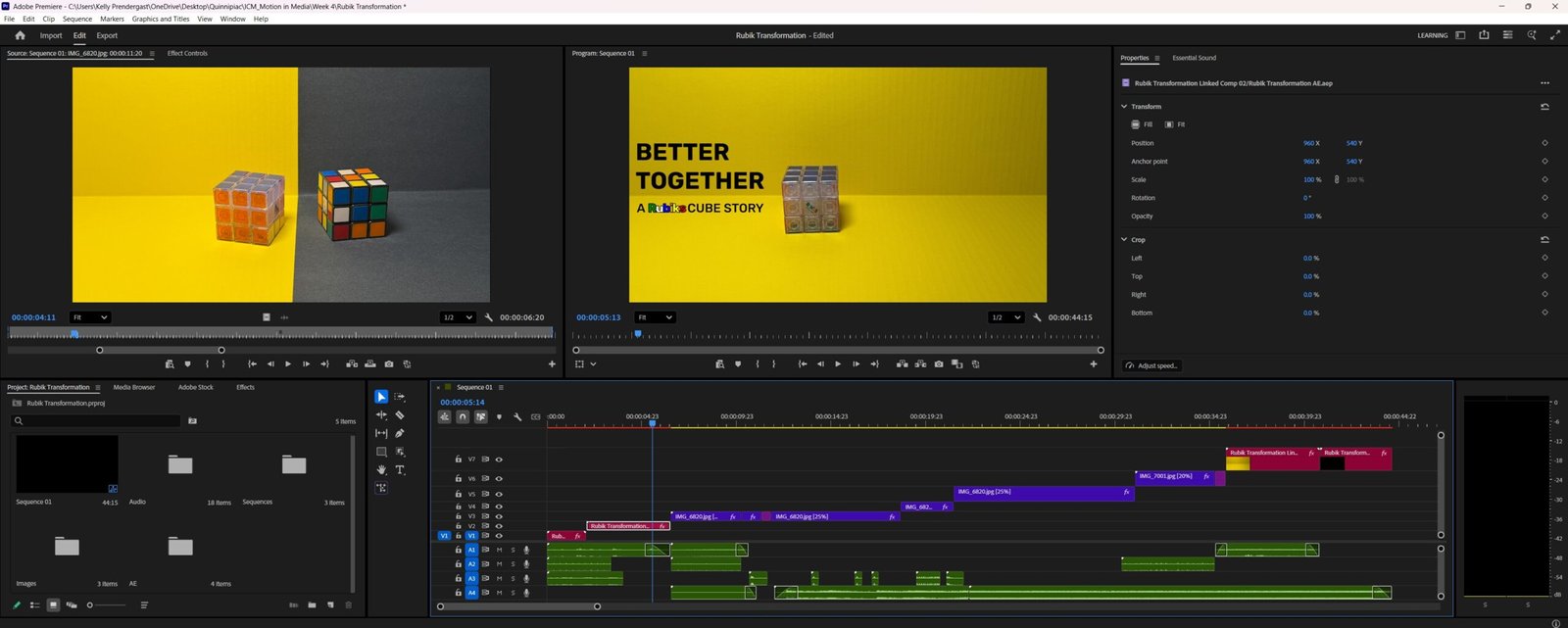
After capturing all the images, I imported everything into Premiere Pro for editing and used After Effects to refine the piece. This stage included adding titles, transitions, sound effects, music, color correction, and the final ending touches. The post-production process allowed me to shape the timing and emotional flow, ensuring the visuals and audio worked together to fully communicate the story.
A glimpse at my editing workflow in Premiere:
References
Blazer, L. (2019). Animated Storytelling (2nd ed.). Peachpit Press.
No responses yet